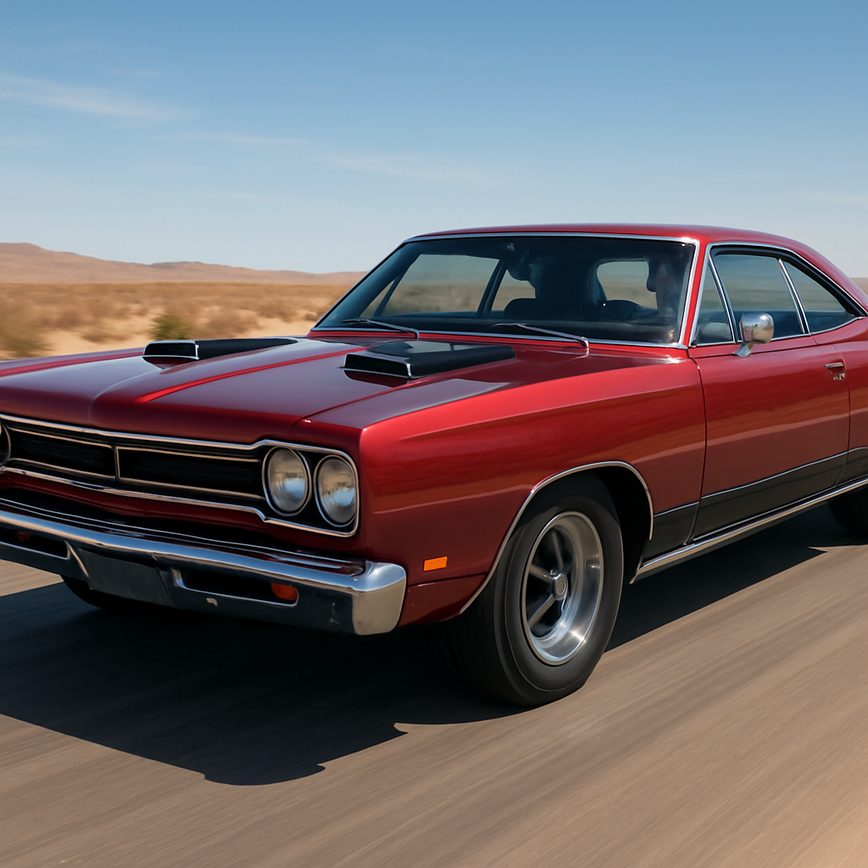
Introduction to Plymouth GTX and Road Runner
The Plymouth GTX and Road Runner are two iconic names in the world of muscle cars, each embodying a unique blend of power, style, and performance that has captivated car enthusiasts for decades. As symbols of the golden era of American muscle cars, both vehicles hold a special place in automotive history, representing Plymouth’s dedication to delivering exhilarating driving experiences.
Introduced in the late 1960s, the Plymouth GTX was designed as a “gentleman’s muscle car,” offering a balance of high-performance engineering and upscale features. It stood out not only for its powerful engines but also for its distinctive styling and attention to detail, aimed at motorists who wanted muscle car muscle with a touch of luxury. The GTX quickly gained a reputation as a formidable contender in the muscle car segment, appealing to drivers who sought both speed and sophistication.
On the other hand, the Road Runner was Plymouth’s answer to a more straightforward, no-nonsense muscle car. Named after the popular cartoon character, the Road Runner was designed to offer raw performance without any unnecessary frills. It was all about delivering maximum horsepower and an aggressive driving experience at a more affordable price point. This approach made the Road Runner exceptionally popular among younger enthusiasts and those who wanted the thrill of muscle driving on a budget.
Both the Plymouth GTX and Road Runner contributed significantly to the muscle car culture of the 1960s and 1970s, but they catered to different tastes and priorities. The GTX’s blend of performance and luxury contrasted with the Road Runner’s straightforward focus on power and simplicity. This comparison highlights the diverse appeal of muscle cars and Plymouth’s strategic approach to capturing various segments of the market.
As we delve deeper into the comparison of these two muscle cars, it becomes clear that each vehicle offers a distinct driving experience and style. Understanding their origins and place in muscle car history sets the stage for a detailed exploration of their features, performance capabilities, and overall impact on automotive enthusiasts. Whether you lean towards the refined aggression of the Plymouth GTX or the raw excitement of the Road Runner, this comparison provides valuable insights into what makes each car a legend in its own right.
History and Background
The Plymouth GTX and Road Runner are two iconic muscle cars that emerged during the golden era of American muscle cars in the late 1960s. The Plymouth GTX was first introduced in 1967 as a high-performance version of the Plymouth Belvedere, aimed at combining power with a touch of luxury. It was often marketed as the “gentleman’s muscle car,” boasting a more refined design and upscale features compared to many of its muscle car competitors. Plymouth GTX history reflects its development as a bridge between brute force performance and everyday usability, offering powerful engines such as the 440 cubic inch V8 and later, the legendary 426 HEMI.
The Road Runner, on the other hand, was launched by Plymouth in 1968 as a budget-friendly muscle car designed to deliver raw performance without the extra frills. Its background is rooted in the desire to produce an affordable, no-nonsense car that muscle car enthusiasts could enjoy on a tight budget. The Road Runner’s design goals were centered on simplicity, light weight, and power, featuring distinctive cartoon-themed styling inspired by the Warner Bros. character, which added a fun element to its aggressive performance credentials. Both cars played crucial roles in muscle car origins by catering to different customer preferences – the GTX appealing to those seeking power with style, and the Road Runner targeting pure, accessible muscle car excitement.
Target Audience and Market Positioning
During their production years, the Plymouth GTX and the Road Runner were positioned to appeal to distinct segments of muscle car buyers, each with tailored marketing strategies. The Plymouth GTX was marketed as a more upscale muscle car, aimed at buyers who sought a blend of performance and luxury. Its target audience included young professionals and muscle car enthusiasts who wanted a stylish, powerful vehicle that also offered comfort and some high-end features. The GTX was often promoted through advertisements that highlighted its combination of speed, refinement, and a smooth ride, appealing to those who valued both aesthetics and substance in their muscle car purchase.
In contrast, the Road Runner was positioned as a no-nonsense, affordable muscle car designed for raw performance and fun. It targeted younger, more budget-conscious muscle car buyers who prioritized power and speed over luxury. The Road Runner’s marketing approach emphasized its aggressive performance capabilities, lightweight design, and value for money. It attracted buyers who wanted the thrill of a muscle car without the added frills or higher price tag. The brand used bold, energetic advertising campaigns featuring cartoon mascots to appeal to a younger, more rebellious audience.
Overall, while both vehicles targeted muscle car buyers, the Plymouth GTX catered to those looking for an elevated driving experience with luxury touches, and the Road Runner focused on delivering straightforward muscle car excitement at an accessible price point. This differentiation in market positioning allowed them to coexist within the muscle car landscape, each serving unique customer preferences and needs.
Performance and Specifications Comparison
When comparing the Plymouth GTX vs Road Runner in terms of engine specs, both muscle cars offer impressive performance, but they cater to slightly different preferences for power and speed enthusiasts. The Plymouth GTX typically came equipped with more powerful engine options, distinguishing itself with a strong emphasis on raw horsepower and muscle car performance.
The GTX was often powered by the formidable 440 cubic inch V8 engine, delivering horsepower ratings upwards of 375 hp. This powerhouse was also available in the Super Commando version, which pushed the horsepower to an even more aggressive 390 hp. In contrast, the Road Runner focused more on a balance between performance and affordability, commonly offering a 383 cubic inch V8 producing around 335 horsepower. For those seeking maximum muscle car performance, the GTX’s higher horsepower ratings meant quicker acceleration and superior straight-line speed, making it a favorite for drag racing and high-speed cruising.
Acceleration figures further highlight the Plymouth GTX’s advantage in performance metrics. While specific times vary based on model year and configuration, the GTX was known for its brisk 0-60 mph times under 6 seconds when equipped with the 440 Super Commando engine. The Road Runner, while not far behind, typically posted slightly slower times due to its less aggressive engine tuning and focus on budget-conscious muscle car buyers.
Beyond raw horsepower and acceleration, overall performance of both cars was characterized by their robust construction and handling capabilities. The GTX often came with heavier-duty suspension components and braking systems designed to complement its potent engine offerings, giving drivers a more refined muscle car experience. The Road Runner, on the other hand, was known for its lighter weight and straightforward engineering aimed at delivering fun and reliable muscle car performance without the extra frills.
In summary, the Plymouth GTX vs Road Runner comparison shows that while both are iconic muscle cars delivering thrilling power and excitement, the GTX takes the edge in engine specs and horsepower, providing superior acceleration and muscle car performance. Enthusiasts seeking the pinnacle of muscle car power and aggressive driving dynamics would likely favor the GTX, whereas those wanting a more accessible but still formidable performer might prefer the Road Runner.
Engine and Powertrain Options
The Plymouth GTX and Road Runner both offer a captivating array of engine types that exemplify the muscle car prowess of their era. The Plymouth GTX is renowned for its powerful engine options, featuring notable muscle car engines such as the 440 cubic inch V8 that produces up to 375 horsepower, delivering impressive torque and acceleration. For enthusiasts seeking even more power, the GTX also offered the legendary 426 HEMI V8 engine, which boasts 425 horsepower, making it a true beast on the road. Unique features of these engines include superior air intake designs and reinforced components optimized for high-performance driving.
On the other hand, the Road Runner focused on providing robust yet slightly more accessible engine and powertrain options. It was commonly equipped with the 383 cubic inch V8 engine, offering 335 horsepower, a solid balance of power and everyday drivability. Like the GTX, the Road Runner featured the 426 HEMI option, appealing to muscle car fans craving extreme performance. Both models employed heavy-duty automatic and manual transmission choices to complement the powertrains, ensuring that each engine’s potential was fully realized. The Road Runner’s engines were designed with a focus on reliability and performance, making it a formidable competitor in the muscle car market.
In summary, the Plymouth GTX offers a slightly more upscale and high-output range of engine types, while the Road Runner provides powerful muscle car engines with a focus on raw, straightforward power. Both models showcase a variety of powertrain options that emphasize muscle car performance, catering to different tastes and driving preferences.
Handling and Ride Quality
The Plymouth GTX and the Road Runner both possess muscle car suspension setups that emphasize performance, but each car approaches handling and ride quality with slight variations reflective of their unique characteristics. The Plymouth GTX features a more refined suspension system designed to balance aggressive handling with an unexpectedly comfortable ride. Its suspension tuning incorporates heavy-duty springs and shocks, along with front and rear sway bars that deliver improved road grip and reduced body roll during cornering. This makes the GTX particularly adept at maintaining stability without compromising the ride’s smoothness, a nod to its more upscale muscle car persona.
In contrast, the Road Runner’s suspension is tuned with a more raw, performance-focused mindset that prioritizes handling over ride comfort. Its setup includes a robust front suspension with leaf springs in the rear, tailored to withstand aggressive driving and rapid directional changes. This makes the Road Runner more agile on twisty roads but results in a firmer ride quality that may feel less forgiving over rough surfaces. The muscle car suspension design in the Road Runner emphasizes direct feedback and control, appealing to enthusiasts seeking an uncompromised driving experience.
Ultimately, while both cars offer impressive handling capabilities, the Plymouth GTX leans towards a blend of handling prowess and ride comfort, ideal for those wanting muscle car excitement with some refinement. The Road Runner, meanwhile, focuses squarely on pure handling dynamics, delivering a tougher, sportier ride that reflects its performance-first philosophy.
Fuel Efficiency and Practicality
When comparing the Plymouth GTX and the Road Runner in terms of fuel efficiency and practicality, it’s important to remember that both are classic muscle cars, which tend to prioritize performance over economy. However, there are notable differences that impact daily driving usability. The GTX, often equipped with larger, more powerful engines, generally consumes more fuel, resulting in lower gas mileage compared to the Road Runner. This can make the GTX less practical for everyday commuting, especially given rising fuel costs and environmental considerations.
Conversely, the Road Runner, known for its simpler and lighter build, often offers slightly better fuel efficiency. Its engines, while still robust, were designed in a way that can yield improved gas mileage under typical driving conditions. This makes the Road Runner a somewhat more practical choice for muscle car enthusiasts who want a blend of raw power and better fuel economy. Additionally, the Road Runner’s less complex features can contribute to lower maintenance costs and easier usability in day-to-day driving scenarios.
In terms of overall practicality, neither muscle car is ideal for those seeking a fuel-efficient daily driver. Yet, the Road Runner edges out the GTX in muscle car usability for everyday use due to its relatively better fuel efficiency and simpler design. Enthusiasts should weigh the delight of powerful performance against fuel consumption and practicality, factoring in how and where they intend to drive their muscle car most often.
Design, Features, and Legacy
The Plymouth GTX and Road Runner were two iconic muscle cars that captured the spirit of 1960s and 1970s American automotive culture. When examining their car design, both vehicles showcased distinctive styling cues that set them apart while appealing to muscle car enthusiasts. The Plymouth GTX exhibited a more refined and aggressive appearance, with its sleek, sculpted lines, bold front grille, and often a luxurious touch with optional chrome detailing. In contrast, the Road Runner emphasized a raw and straightforward design, focusing on function over form, featuring bold graphics and the instantly recognizable “beep beep” horn that became a signature trait.
Inside, the Plymouth GTX offered interior features that leaned towards comfort and sophistication, including high-quality upholstery, woodgrain dashboard accents, and advanced instrumentation for the era. This muscle car was designed with the driver’s experience in mind, balancing performance with a stylish cabin environment. The Road Runner’s interior was more utilitarian, reflecting its no-nonsense approach to muscle car thrills. It favored simplicity with vinyl seats and minimal decor, ensuring lightweight construction that enhanced performance. Despite the differences, both interiors contributed to the overall appeal, emphasizing their respective brand philosophies.
The cultural legacy of these cars is deeply embedded in the classic muscle car legacy of America. The Plymouth GTX came to symbolize a blend of power and prestige, gaining admiration for its ability to deliver muscle car performance without sacrificing style. On the other hand, the Road Runner earned a place as the “everyman’s muscle car,” beloved for its affordability, straightforward design, and charismatic personality. Together, they represent two different approaches to the muscle car phenomenon: one more polished and performance-oriented, the other raw and accessible.
Collectors and enthusiasts today continue to celebrate both models, preserving their unique contributions to automotive history. The GTX’s influence is seen in muscle cars that aim to combine luxury with power, while the Road Runner’s legacy lives on in cars that prioritize driving excitement and value. Ultimately, both the Plymouth GTX and Road Runner left an indelible mark on car design, interior features, and their cultural legacy, securing their places as icons in the classic muscle car world.
Exterior and Interior Design
The Plymouth GTX stands out from the Road Runner with its distinct car design, emphasizing a more upscale and refined approach to classic muscle styling. While both cars share the aggressive and bold lines typical of muscle cars, the GTX incorporates additional chrome accents, a more pronounced grille, and unique badging that conveys a sense of luxury and sophistication. The exterior of the GTX is often complemented by special paint options and sportier wheel designs that elevate its visual appeal beyond the more utilitarian Road Runner.
Inside, the GTX boasts interior features that prioritize comfort and convenience alongside raw power. Plush bucket seats, often adorned with premium upholstery, give the driver and passengers a more comfortable ride. The dashboard and instrument panel in the GTX are more detailed, often featuring wood grain inserts or custom trim that reinforce the upscale vibe. Additional amenities such as enhanced sound systems, carpeting, and optional air conditioning further distinguish the GTX’s interior from the more spartan Road Runner.
Overall, the car design of the Plymouth GTX is a harmonious blend of classic muscle styling infused with luxury cues. Its visual elements and interior features clearly mark it as the more premium option between the two, appealing to buyers who want muscle car performance without sacrificing refinement and comfort.
Notable Features and Options
The Plymouth GTX and Road Runner both offered impressive special trims, options packages, and unique features that appealed to muscle car enthusiasts in their era. The Plymouth GTX was often branded as a “gentleman’s muscle car,” featuring a higher level of standard equipment and refined options compared to the Road Runner. Notable car features included standard bucket seats, a full instrument cluster, and a more plush interior with upgraded trim. The GTX also offered special editions such as the “High-Impact” colors package and the rare Hurst-shifted automatic transmission, which added a flair of exclusivity and performance appeal.
On the other hand, the Road Runner leaned more toward being a straightforward, no-nonsense muscle car with an emphasis on raw power and affordability. Muscle car options available for the Road Runner included the legendary 426 HEMI engine and the Super Commando 440 package, which significantly boosted its performance credentials. Unique features like the iconic Road Runner horn and the available “Air Grabber” hood scoop made this model stand out in terms of both style and function.
Both models had their own special editions, with Plymouth offering the GTX Gold Hood Ornament as a unique signature, while the Road Runner featured limited-run trims that highlighted its muscle car heritage. Ultimately, the special trims and options packages of each vehicle reflected their target audiences—luxury combined with muscle for the GTX versus pure, unfiltered muscle car experience for the Road Runner.
Cultural Impact and Collector Value
The Plymouth GTX and the Road Runner both hold significant places in muscle car culture, celebrated not only for their raw power and performance but also for their contribution to America’s automotive legacy. These models have transcended their original roles as mere transportation and have become symbols of an era defined by speed, style, and rebellion. The GTX, often viewed as the more upscale sibling, impressed with its combination of performance and sophistication, while the Road Runner captured hearts with its no-nonsense approach and affordability, appealing directly to youthful enthusiasts.
In terms of collector cars, both the Plymouth GTX and Road Runner have seen their values rise steadily as their rarity increases. The GTX’s limited production numbers and unique design features make it highly sought after among collectors who appreciate the blend of muscle and refinement. Conversely, the Road Runner’s cultural impact as a budget-friendly muscle car has earned it a dedicated following, driving demand and highlighting its importance in the muscle car legacy.
Collectors prize these cars not only for their performance but also for their representation of the muscle car boom that defined a pivotal moment in automotive history. Owning a GTX or a Road Runner today is like owning a piece of that heritage — a tangible connection to the bold, spirited culture that shaped muscle cars into icons. This enduring appeal ensures that both models remain valuable additions to any muscle car collection and continue to influence car enthusiasts and restorers alike.

Ever since I bought my first used pickup truck, I’ve been obsessed with finding the perfect blend of off-road capability and weekend comfort. I spend my free time exploring state parks and tinkering with restoration projects in my garage. My writing focuses on how vehicles can enhance your lifestyle and outdoor adventures.