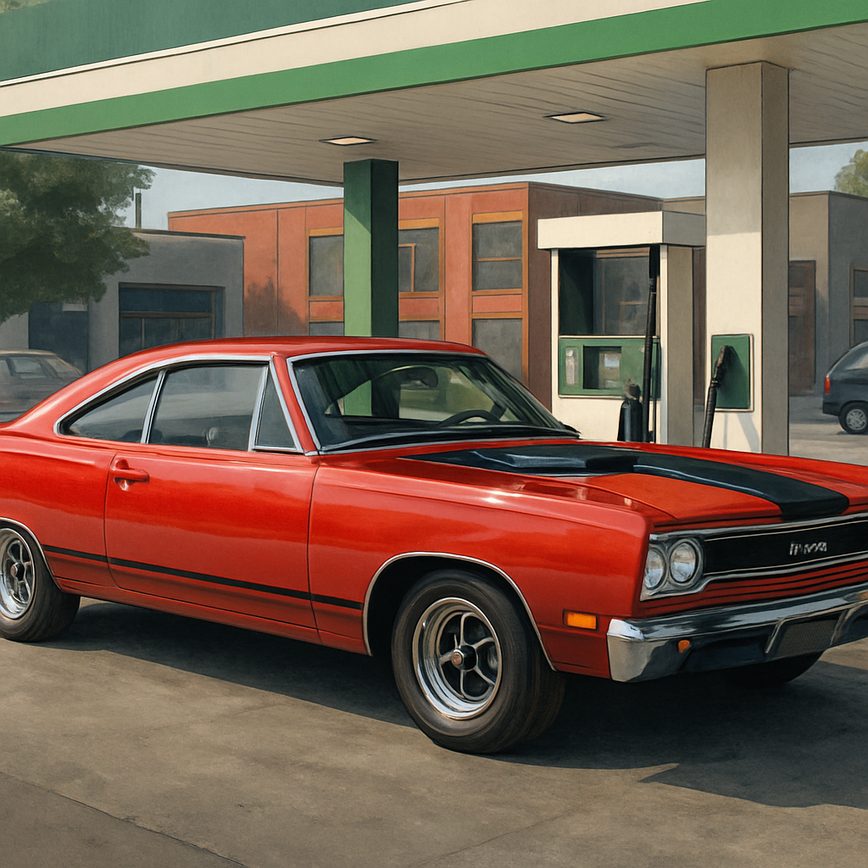
Overview of Plymouth GTX Fuel Consumption
The Plymouth GTX is an iconic classic muscle car that has captured the admiration of car enthusiasts for decades. Known for its powerful engine options and aggressive styling, the Plymouth GTX embodies the spirit of American muscle cars from the late 1960s and early 1970s. However, when it comes to Plymouth GTX fuel consumption, it’s important to understand that these vehicles were built more for performance and raw power than for fuel efficiency. This characteristic is common among many classic muscle cars.
Plymouth GTX MPG (miles per gallon) figures vary depending on the engine configuration and driving conditions, but generally, they reflect the lower fuel efficiency one would expect from a muscle car of this era. Engines such as the 440 cubic inch V8 or the 426 HEMI were designed to deliver high horsepower and torque, attributes that naturally lead to higher fuel consumption. Classic muscle cars typically get between 10-15 MPG, though exact numbers can change based on tuning, maintenance, and driving habits.
Several factors influence the fuel efficiency of the Plymouth GTX and similar classic cars. Weight plays a significant role; these cars were built solidly with heavy materials, which impacts fuel consumption negatively. Aerodynamics were not a primary design focus, leading to increased air resistance at higher speeds. Additionally, carbureted engines, which were standard in muscle cars at the time, do not match the fuel efficiency of modern fuel-injected engines. The technology and fuel quality of the era also contributed to less-than-optimal fuel efficiency compared to contemporary vehicles.
Despite the relatively high fuel consumption, many Plymouth GTX owners embrace these classic cars for their exterior charm, historical significance, and thrilling driving experience rather than their fuel economy. Maintaining a Plymouth GTX in good running condition with tuned carburetors and proper maintenance can help improve fuel efficiency slightly. Nevertheless, classic car fuel efficiency, including that of the Plymouth GTX, remains a trade-off for the exhilarating power and nostalgic appeal muscle cars offer.
Factors Affecting Fuel Consumption
Several key fuel efficiency factors influence the fuel consumption of the Plymouth GTX. One of the most significant is the engine size impact. Larger engines typically consume more fuel because they require more energy to produce higher power outputs. The Plymouth GTX, known for its powerful V8 engines, naturally demands more fuel compared to smaller, less powerful engines.
Driving habits also play a crucial role in determining fuel consumption. Aggressive driving behaviors such as rapid acceleration, speeding, and frequent braking can greatly reduce fuel efficiency. Conversely, smooth, steady driving at moderate speeds helps optimize fuel usage and improve mileage. For Plymouth GTX owners, moderating driving style can result in noticeable savings at the pump.
Another important factor is the vehicle weight. Heavier vehicles require more energy to move, leading to higher fuel consumption. The Plymouth GTX, with its sturdy build and classic muscle car dimensions, often weighs more than modern compact cars, which affects overall fuel efficiency. Reducing unnecessary weight load inside the vehicle can help improve fuel economy further.
In summary, the interplay of engine size impact, driving habits, and vehicle weight are primary determinants of the Plymouth GTX’s fuel consumption. Understanding these fuel efficiency factors can help owners make informed decisions to optimize performance and save fuel.
Typical Fuel Economy Ratings
The Plymouth GTX, a revered classic muscle car, is known more for its power than its fuel efficiency. However, understanding the Plymouth GTX MPG ratings provides valuable insight for enthusiasts and collectors. Typical fuel economy estimates for the Plymouth GTX range depending on the model year and engine configuration. For example, early 1970s models equipped with the 440 cubic inch V8 engine average around 10 to 12 miles per gallon in city driving and approximately 15 to 17 MPG on highways. The more powerful 426 HEMI variant tends to consume more, with average ratings closer to 8 to 10 MPG under typical driving conditions.
When comparing these fuel economy numbers to similar classic muscle cars, the Plymouth GTX’s consumption figures are fairly representative of the segment’s norms. For instance, the Chevrolet Chevelle SS with a 396 V8 engine posts similar MPGs, usually around 10-13 in urban settings and up to 18 on highways. Likewise, the Dodge Charger from the same era, particularly those equipped with large displacement V8s, also fall within this fuel consumption range.
These fuel economy estimates highlight the classic muscle car trend of prioritizing performance over efficiency, where Plymouth GTX MPG ratings reflect the balance struck between raw power and fuel consumption. Car buyers today should expect these older muscle cars to have higher fuel usage compared to modern vehicles but appreciate the thrilling driving experience these iconic machines deliver.
Improving Fuel Efficiency in a Plymouth GTX
Improving fuel efficiency in a classic car like the Plymouth GTX requires a careful balance between maintaining its iconic performance and preserving its authenticity. For enthusiasts dedicated to classic car tuning, there are practical ways to enhance fuel economy while still enjoying the powerful driving experience that defines the Plymouth GTX.
One of the most effective fuel saving tips is to start with regular maintenance. Ensuring the engine is in peak condition, with clean spark plugs, properly adjusted carburetors, and a well-maintained ignition system, will optimize fuel combustion and reduce waste. Additionally, using high-quality fuel additives designed for classic engines can improve combustion efficiency without altering the originality of the vehicle.
Another key Plymouth GTX modification to consider is upgrading to an electronic ignition system. Unlike traditional points-based ignition, electronic ignition provides a more reliable and precise spark, which improves fuel efficiency and overall engine performance. This upgrade is often reversible, allowing drivers to retain the car’s vintage appeal while benefiting from modern technology.
Adjusting the tire pressure and switching to modern radial tires with lower rolling resistance can also help improve fuel efficiency. Proper tire maintenance not only enhances safety but reduces the engine’s workload, translating to better miles per gallon. Drivers should avoid oversized tires, which can strain the drivetrain and decrease fuel economy.
For those willing to explore more advanced classic car tuning, optimizing the carburetor jetting to better match current driving conditions and fuel types can lead to noticeable fuel savings. This fine-tuning ensures the engine runs lean enough to conserve fuel but rich enough to prevent damage and maintain power. Additionally, installing a high-flow air filter enhances airflow to the engine, which supports combustion efficiency.
Finally, mindful driving habits play an essential role in improving fuel efficiency. Gentle acceleration, avoiding excessive idling, and reducing overall weight by removing unnecessary items from the car can contribute to fuel savings without any permanent modifications. These steps complement mechanical adjustments and keep the Plymouth GTX performing authentically while consuming less fuel.
Maintenance Tips for Better MPG
To maximize fuel economy in your Plymouth GTX, proper engine maintenance is essential. Regular tune-ups play a crucial role in ensuring that the engine runs efficiently, which directly impacts fuel consumption. During a tune-up, components such as spark plugs, air filters, and ignition systems are inspected and replaced if necessary to maintain optimal engine performance. This helps the engine burn fuel more effectively, resulting in better miles per gallon (MPG).
Fuel system care is another vital aspect of optimizing fuel consumption. Over time, fuel injectors and carburetors can accumulate deposits that inhibit fuel flow and reduce engine efficiency. Using fuel system cleaners and having periodic professional cleanings can keep the fuel delivery system functioning smoothly. Additionally, keeping the fuel filter clean prevents contaminants from reaching the engine, protecting its components and maintaining fuel economy.
Maintaining proper tire pressure and regularly checking for engine leaks and worn-out parts also contribute to better MPG. A well-maintained engine experiences less strain, consumes fuel more efficiently, and ultimately reduces your trips to the gas station. By following these tune-up tips and fuel system care routines, Plymouth GTX owners can enjoy improved fuel economy and a more reliable driving experience.
Modern Modifications to Increase Efficiency
Modern upgrades offer Plymouth GTX owners the opportunity to enhance fuel efficiency while maintaining the iconic classic appeal. One of the most effective modifications is the fuel injection conversion, which replaces the traditional carburetor with a more precise and controlled fuel delivery system. This upgrade not only improves throttle response and engine performance but also significantly reduces fuel consumption by optimizing the air-fuel mixture.
Another popular modification is the exhaust system upgrade, which involves installing high-flow catalytic converters, performance mufflers, and stainless-steel headers. These components reduce backpressure and improve exhaust flow, allowing the engine to breathe more freely and operate more efficiently. The result is a noticeable increase in miles per gallon without sacrificing the Plymouth GTX’s distinctive roar and aesthetic.
Incorporating modern emissions control systems is also beneficial for fuel efficiency and environmental responsibility. Up-to-date oxygen sensors and electronic control units (ECUs) work together to monitor and adjust the engine’s operation, ensuring cleaner combustion and adherence to stricter emissions standards. These enhancements help preserve the car’s classic look while making it more compliant with current environmental regulations.
By carefully selecting and installing these modern modifications—fuel injection conversion, exhaust system upgrades, and emissions control improvements—owners can enjoy a Plymouth GTX that is both efficient and true to its vintage character.
Comparing Plymouth GTX Fuel Consumption with Other Classic Muscle Cars
When it comes to muscle car fuel comparison, the Plymouth GTX holds a notable position, especially when measured against its classic muscle car peers. While muscle cars are often not celebrated for their fuel efficiency, understanding how the Plymouth GTX stacks up against competitors provides valuable insight for enthusiasts and potential buyers concerned about fuel consumption.
The Plymouth GTX, renowned for its powerful 440 cubic-inch V8 engine, was a beast on the road but also quite the thirsty vehicle. On average, the Plymouth GTX delivered a fuel economy in the range of 10-14 miles per gallon (MPG), depending on driving conditions and modifications. This was fairly typical in the muscle car segment during the late 1960s and early 1970s, where performance often took precedence over economy.
Comparing the Plymouth GTX vs competitors like the Chevrolet Chevelle SS, Ford Mustang GT, and Dodge Charger reveals similarities and slight variations in fuel consumption. For example, the Chevrolet Chevelle SS with its big-block V8 engine averaged around 12-15 MPG, slightly better than the GTX in some cases, largely due to differences in engine tuning and weight. The Ford Mustang GT, especially the models equipped with the 390 cubic-inch V8 or 428 Cobra Jet, often averaged closer to 12-16 MPG, making it somewhat more fuel-efficient but still competitive within the muscle car segment.
The Dodge Charger, a direct competitor in the muscle car arena, especially equipped with the 426 HEMI engine, typically achieved fuel economy figures in the 9-13 MPG range. This puts the Plymouth GTX squarely in the middle of classic car MPG comparison charts, not the worst but by no means the most fuel-efficient either. These figures highlight that while muscle cars, including the GTX, are more about raw power and speed, fuel economy remains a significant factor that separates the individual models.
In summary, the Plymouth GTX provides a muscle car fuel comparison that fits well within the expected range for classic muscle cars from its era. Prospective buyers should consider that while the GTX offers impressive performance, its fuel consumption mirrors that of similar muscle cars. This balance of power and efficiency places the Plymouth GTX as a respectable choice, particularly for those looking to enjoy classic car driving without facing the absolute worst fuel economy among muscle cars.
Fuel Consumption of Popular Muscle Car Rivals
When considering muscle cars, fuel economy is an important factor alongside performance. Let’s take a look at the fuel consumption of some popular muscle car rivals for a direct comparison with the Plymouth GTX.
The Chevrolet Chevelle, a strong competitor in the muscle car world, typically offers a fuel economy ranging from about 12 to 18 miles per gallon depending on the engine size and year. Larger V8 engines in the Chevelle naturally consume more fuel but deliver impressive power.
The Chevrolet Camaro shows a range in fuel efficiency that varies with its engine options. Generally, the Camaro achieves around 16 to 22 MPG on average. The more powerful V8 versions tend toward the lower end of that spectrum, while the V6 and four-cylinder models provide better fuel economy.
Another notable rival is the Dodge Charger, known for its muscle car heritage and performance. Its fuel consumption typically falls between 14 and 20 miles per gallon, with the high-performance HEMI V8 engines consuming more fuel, while the V6 models offer slightly improved MPG figures.
Comparing these figures, the Plymouth GTX holds its own with fuel economy in a range similar to these muscle cars. Practicality and power balance differently for each model, but understanding the Chevelle fuel economy, Camaro MPG, and Dodge Charger fuel consumption can help prospective buyers make an informed decision based on their priorities.
What Sets the Plymouth GTX Apart?
The Plymouth GTX stands out in the muscle car world due to its unique blend of classic muscle characteristics and innovative engineering choices that influence fuel consumption in ways distinct from its competitors. Unlike many other muscle cars of its era that prioritized raw power at the expense of efficiency, the GTX incorporated thoughtful design elements that balanced performance vs fuel economy. This balance is a core part of the Plymouth GTX uniqueness.
One of the key features that sets the Plymouth GTX apart is its engine tuning and multi-carburetor setup, which allowed for optimized air-fuel mixtures depending on driving conditions. This engineering decision helped reduce excessive fuel burn when cruising, unlike rivals that ran rich fuel mixtures constantly. Additionally, the GTX’s slightly lighter chassis and aerodynamic body lines address drag and weight factors directly influencing fuel consumption. Muscle cars typically suffer from heavy frames and boxy designs that worsen economy, but the GTX’s refined construction helps mitigate these issues without sacrificing power output.
Furthermore, the Plymouth GTX incorporated advanced suspension systems and gear ratios designed to maximize road grip and driving efficiency. These specifications allowed the car to perform aggressively yet manage engine load effectively, a combination seen less frequently in classic muscle cars focused solely on speed. Overall, the Plymouth GTX uniqueness lies in its successful marriage of high-performance muscle car traits and engineering that thoughtfully considers fuel consumption, making it a standout choice for enthusiasts who value both classic muscle characteristics and smarter fuel use.

Ever since I bought my first used pickup truck, I’ve been obsessed with finding the perfect blend of off-road capability and weekend comfort. I spend my free time exploring state parks and tinkering with restoration projects in my garage. My writing focuses on how vehicles can enhance your lifestyle and outdoor adventures.