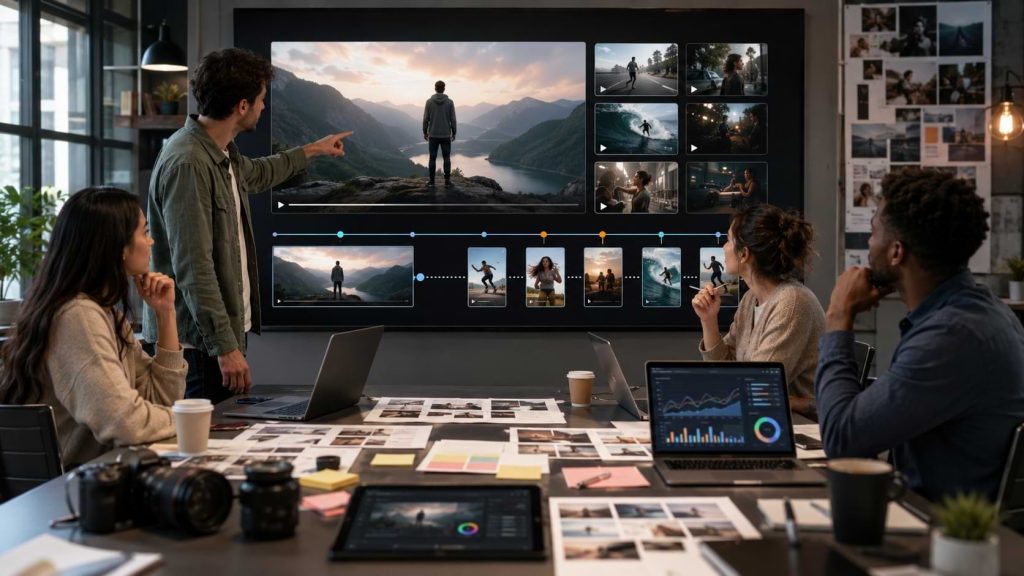
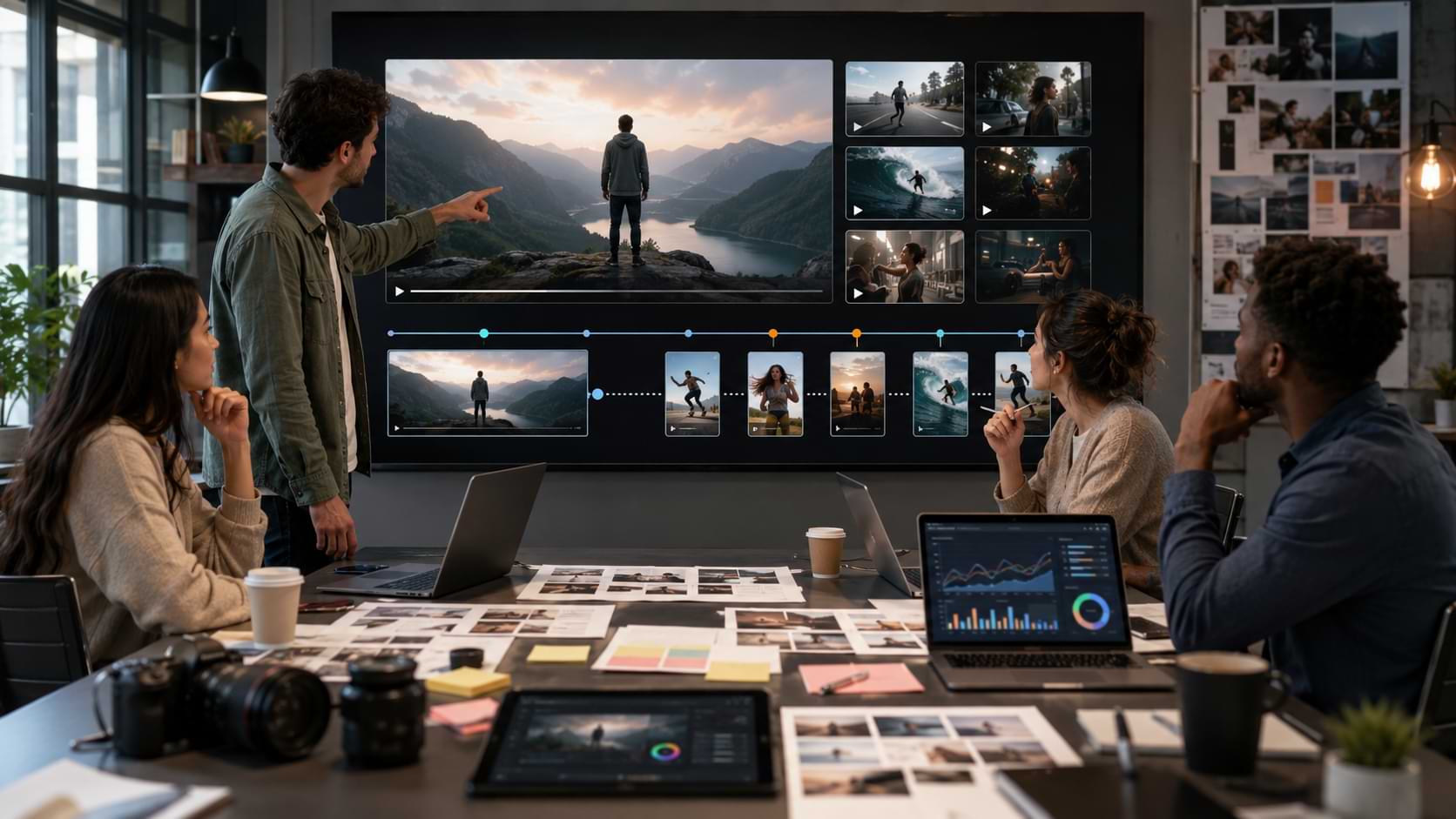
Ask a marketing team how long their video ad should be and you will usually get an answer about the story. Ask a media buyer the same question and you will get an answer about the placement. Both are answering a question that should have been settled weeks earlier, in the production plan, when it was still cheap to change.
Duration is not a creative outcome. It is an input. A sixty-second film and a six-second cut are not the same message at different lengths, and treating the short one as a trailer for the long one wastes both.
The problem with the single hero asset
The traditional model is familiar: pour the budget into one beautiful film, cut it down afterwards, run the pieces everywhere. It made sense when media was bought in blocks and the same spot ran to the same audience all week.
It survives badly on a platform where the same viewer can see your ad four times before lunch. One asset means one hook, and a hook stops working the second time someone encounters it.
Modern ad creative strategy solves that by producing variation rather than perfection. Not four versions of the same edit, but several genuinely different entry points into the same idea.
What each duration is actually for
The hero video, somewhere between forty-five seconds and a few minutes, exists to establish the idea. It carries the emotional weight, the world, the reason anyone should care. It is not efficient and it is not supposed to be. Its job is to make the shorter work legible later.
Mid-length cuts do the heavy lifting. 15 second ads are long enough to carry a complete thought and short enough to survive a skip-first environment. Most of your delivered impressions will sit here, and this is where the majority of production attention should go once the hero exists.
6 second bumper ads are a different craft altogether. Unskippable, sold on impressions, and far too short for narrative. One image, one line, one thing the viewer takes away. The mistake is to compress the hero into six seconds. Write bumpers as standalone artifacts that assume the viewer already knows the world, then let the hero create that knowledge.
Then there is everything vertical. short form video ads for Shorts and mobile feeds need their own framing, their own pacing, and usually their own shoot day, because reformatting horizontal footage into a nine-by-sixteen crop looks exactly like what it is.
Best practices worth the name
Most youtube ad best practices lists say the same four things, and most of them are correct but under-specified. Here is the version with the reasoning attached.
Establish the brand before the skip button appears. Not a logo in the corner. A recognizable world, a voice, a color, something that makes the viewer place you within the first few seconds even if they leave immediately.
Write the ending first for bumpers. Six seconds has no room for build. If the payoff arrives at second five, you have already lost people to the scroll.
Build for sound-off and reward sound-on. Assume the first viewing is silent. Make it work anyway, then make the audio worth turning up.
And on structure: the data behind effective youtube ads suggests that pairing one emotional hero video with a fleet of localized 6-second bumpers outperforms a single big-budget creative. The logic is straightforward once you see it. The hero buys you comprehension. The bumpers buy you memory. Neither does the other’s job, and a single asset trying to do both ends up mediocre at each.
Localization matters more here than most teams expect. A bumper shot for one market and subtitled for five others reads as imported. A bumper reshot with local faces and local settings, against the same idea, reads as belonging. The production cost difference is smaller than the performance gap.
Frequency is a creative problem
Ad frequency is usually treated as a media setting, which is why it keeps causing creative damage. Recall climbs with repeated exposure up to a point, then flattens while irritation continues rising. Somewhere in the range of four to eight exposures per person per week is where most categories find that ceiling, though a strong idea tolerates more and a weak one considerably less.
The practical implication for ad campaign planning: the number of distinct assets you produce should be set by your intended frequency, not by your budget line for production. If you plan to reach someone six times, six exposures to one film is a very different experience than six exposures spread across four cuts. Same media spend, noticeably different outcome.
Sequencing the fleet
A hero and bumper strategy works best when the order is deliberate. Open with the hero to skippable audiences and let people self-select. Retarget viewers who stayed past the paid-view threshold with the fifteen-second cuts, which can now skip the setup. Close the loop with bumpers for reach and frequency in the weeks after.
Each stage assumes the previous one happened. That is the whole advantage, and it disappears the moment you run all three to the same undifferentiated audience simultaneously.
Shoot for the ladder
The cheapest moment to create six assets is during the one shoot you are already paying for. Before the camera rolls, know how many cuts the edit will produce, what each one needs, and which shots exist only to serve the six-second versions. Bumper-specific coverage is almost never present in footage shot for a film.
This single planning habit does more for video ad performance than most optimization work done afterwards, because you cannot bid your way out of not having the footage.
Reading the results honestly
Judge each asset against the job it was given. View-through rate on a bumper is meaningless, since nobody can skip. Completion rate on a three-minute hero will look terrible next to a fifteen-second cut and tell you nothing.
The youtube advertising tips that survive contact with real accounts tend to be unglamorous: match the metric to the format, retire underperforming cuts quickly rather than defending them, and keep enough variation in rotation that frequency works for you instead of against you.
Build the fleet. The film alone will not carry the campaign.

Ever since I bought my first used pickup truck, I’ve been obsessed with finding the perfect blend of off-road capability and weekend comfort. I spend my free time exploring state parks and tinkering with restoration projects in my garage. My writing focuses on how vehicles can enhance your lifestyle and outdoor adventures.